The Short Answer by Method
For a typical residential lateral (40–80 feet, average depth, reasonable access):
- Pipe lining (CIPP): usually 1 day. The liner goes in, cures for several hours, and you're back in service — often by evening.
- Pipe bursting: usually 1–2 days. Entry and exit pits get dug, the new pipe gets pulled through, connections get made.
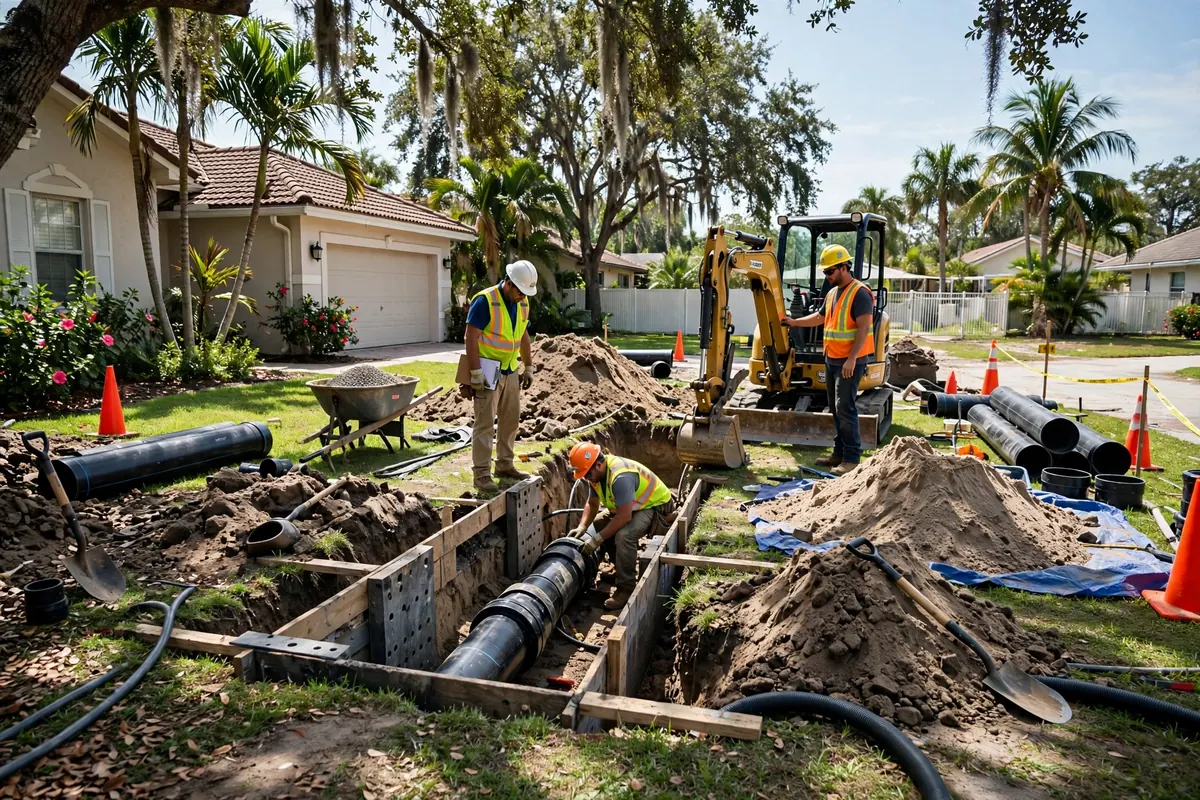
- Traditional excavation: typically 3–5 days for the pipe work itself, plus restoration time. A straightforward run under open lawn trends shorter; a deep line under a driveway trends longer.
- Spot repair: often a single day — it's one excavation, one section, done.
These are working days with a competent crew and no surprises. Surprises, of course, are the reason the rest of this post exists.
What Happens Before Day One
The replacement itself is the middle of the project. Before it:
- Camera inspection and diagnosis — usually a single visit, an hour or two. This should already be done; it's what justified the replacement.
- Permitting — Manatee County and municipal permits for sewer work typically take days to a couple of weeks depending on the jurisdiction and workload. Your contractor handles this, but it sits on the calendar before mobilization.
- Utility locates — required before any digging. In Florida, that's a call to Sunshine 811, and utilities have a couple of business days to mark their lines. Non-negotiable, and it protects everyone.
- Scheduling and mobilization — equipment, materials, crew availability. In peak season or after major storms, reputable companies book out.
From "yes, replace it" to boots on the ground is commonly 1–3 weeks. The pipe work is fast; the runway is what takes time. Plan accordingly — and be suspicious of anyone who can start tomorrow with no permits in hand.
What Can Stretch the Timeline
Honest list of delay factors:
- Depth. A lateral at 8+ feet needs shoring, bigger equipment, and slower, more careful digging. Depth is the single biggest multiplier on dig time.
- Access problems. Lines under slabs, pools, or structures require creative access — sometimes interior work, sometimes carefully sequenced excavation. Tight lots slow everything.
- Weather. An open trench and a Florida afternoon thunderstorm don't mix. Summer storm season can pause dig projects; trenchless methods are far less weather-sensitive.
- Surprises underground. Unmarked utilities, unexpected soil conditions, a lateral that takes a different path than the records showed. Good contractors plan for this; it still costs time when it happens.
- Restoration. The pipe might be done Friday, but sod, pavers, and concrete work schedule separately. Full property restoration can add days to weeks depending on scope — clarify this in your contract.
- High water table. Near the coast, rivers, or canals, dewatering — pumping the trench dry enough to work — adds setup and ongoing time.
Will You Be Without Plumbing?
This is the question behind the question, and the answer is reassuring: usually not for long. During trenchless work, your service is typically interrupted for hours, not days — often just while the liner cures or the new pipe is connected. For traditional replacement, the crew usually keeps you functional by working in sections or timing the tie-in for a single day.
Ask your contractor specifically: "On which days, and for which hours, will I be without water/sewer?" A good answer is precise. "Probably most of the week" is not a plan — it's a warning. For more detail, see our post on using water during sewer repair.
How to Keep Your Project on Schedule
Three things within your control: decide promptly once you have quotes (contractor schedules fill), clear the work area before day one (move vehicles, patio furniture, potted plants from the pipe path), and keep the contract specific about start date, working days, and what counts as complete. Vague timelines produce vague results.
And one mindset shift: the fastest project isn't always the best project. A crew that takes an extra half-day to compact backfill properly and verify grade with a camera has given you a better 50-year pipe than one that rushed to beat the clock. Speed matters — but only after quality.
A Day-by-Day Walkthrough: What to Expect
To make the timeline tangible, here's how a typical 4-day traditional replacement unfolds:
- Day 1 — Setup and main excavation. Equipment arrives, the pipe path is marked, and the trench opens. This is the disruptive-looking day — the yard is open, the old pipe is exposed. Your drains usually still work.
- Day 2 — Pipe replacement. Old pipe comes out, new pipe goes in, connections get made. This is the day your drainage may be limited for several hours during the cutover. The crew should tell you the window that morning.
- Day 3 — Backfill and compaction. The trench gets backfilled in compacted lifts (this step matters enormously in sandy soil — rushed backfill is how new pipes develop bellies). Rough grading restores the surface contour.
- Day 4 — Testing, inspection, and finish work. The line gets camera-verified and pressure-tested, the county inspection happens, and final grading is completed. You get the walkthrough and the warranty paperwork.
Restoration of surfaces — sod, pavers, concrete — often follows on a separate schedule with the appropriate trade. A trenchless job compresses all of this into a single day: access pits in the morning, liner or burst by midday, cure or connection in the afternoon, restoration of two small pits by evening.
Commercial Jobs: Different Scale, Same Principles
For restaurants, offices, and multi-unit properties, the timeline math changes: longer runs, larger-diameter pipe, coordination around business hours, and sometimes phased work to keep the business operating. A restaurant can't lose its drains on a Friday night — so commercial work often happens in overnight or weekend windows, which extends the calendar even when the labor hours are similar.
If you're managing a commercial property, the key conversation with your contractor is sequencing: which sections when, what stays operational, and what's the rollback plan if something runs long. Our commercial sewer services are built around exactly that planning. The residential timeline above is the baseline; commercial adds coordination, not mystery.
The Night-Before Checklist
Work starts tomorrow. Tonight, run through this:
- Move vehicles off the driveway and away from the work path — equipment needs room.
- Clear patio furniture, potted plants, and anything movable from the pipe route.
- Do the laundry and run the dishwasher tonight, not tomorrow.
- Know which bathroom is on the affected drain route (ask the crew lead in the morning if unsure).
- Secure pets indoors away from the work area — open trenches and curious dogs don't mix.
- Charge your phone and save the crew lead's number.
- Take "before" photos of the yard, driveway, and nearby structures — your restoration baseline.
An hour of preparation tonight saves a day of friction tomorrow. The crew handles the underground; you handle the surface. Together, the project stays on the timeline above instead of becoming a story you tell at parties.
The Permit Factor No One Puts on the Calendar
One more timeline element that surprises homeowners: the inspection hold. After the pipe is installed but before backfill is complete, the county inspector must sign off on the work — the pipe, the slope, the connections. Inspectors run on their own schedule, and a missed inspection window can idle the project for a day or more.
Good contractors build this into the timeline and coordinate the inspection in advance. It should never be a surprise. But when you're comparing quotes and one promises a dramatically faster timeline than the others, ask whether they've accounted for permitting and inspection holds — or whether their "fast" is just optimistic. The honest timeline includes the boring administrative parts, not just the digging.
Need help with your sewer line?
We serve Bradenton and all of Manatee County. A camera inspection is the fastest way to know what's going on.
Call (941) 214-9486