1. Multiple Drains Slowing Down at Once
One slow sink is usually a local clog — hair, grease, the usual suspects. But when the kitchen sink, the shower, and the guest bathroom all start draining slowly around the same time, the problem isn't in any one drain. It's downstream, in the main line they all share.
This is the single most reliable early warning of a sewer lateral problem. The blockage — roots, scale buildup, a belly collecting debris — is restricting flow for the whole house. It'll get worse, not better. Main drain issues caught at this stage are often fixable with cleaning; ignored, they become excavation.
2. Gurgling Sounds From Drains or Toilets
That glug-glug from the shower drain when the washing machine empties? That's air being forced through trapped water because something downstream is blocking normal airflow and drainage. Plumbing is supposed to be boring and silent. Gurgling is your system complaining out loud.
Occasional gurgling after heavy use can be innocent. Regular gurgling — especially from toilets or floor drains — means pressure is building where it shouldn't. In Bradenton's older neighborhoods with 1950s–70s cast iron laterals, gurgling often shows up alongside internal scaling that narrows the pipe year by year.
3. Sewage Smells Inside or Outside the House
A healthy sewer system is airtight. If you're smelling rotten eggs or raw sewage — from a drain, in the yard, near a cleanout — something has breached that seal. Common causes: a dried-out trap (easy fix, run water), a cracked vent pipe, or a cracked lateral letting sewer gas escape underground and seep up.
Yard smells are the more serious variant. If the odor is strongest in one patch of lawn, that's worth investigating promptly — it can mean a broken pipe is leaching below the surface. Our odor detection service exists precisely because "somewhere smells bad" is a terrible diagnostic starting point without the right equipment.
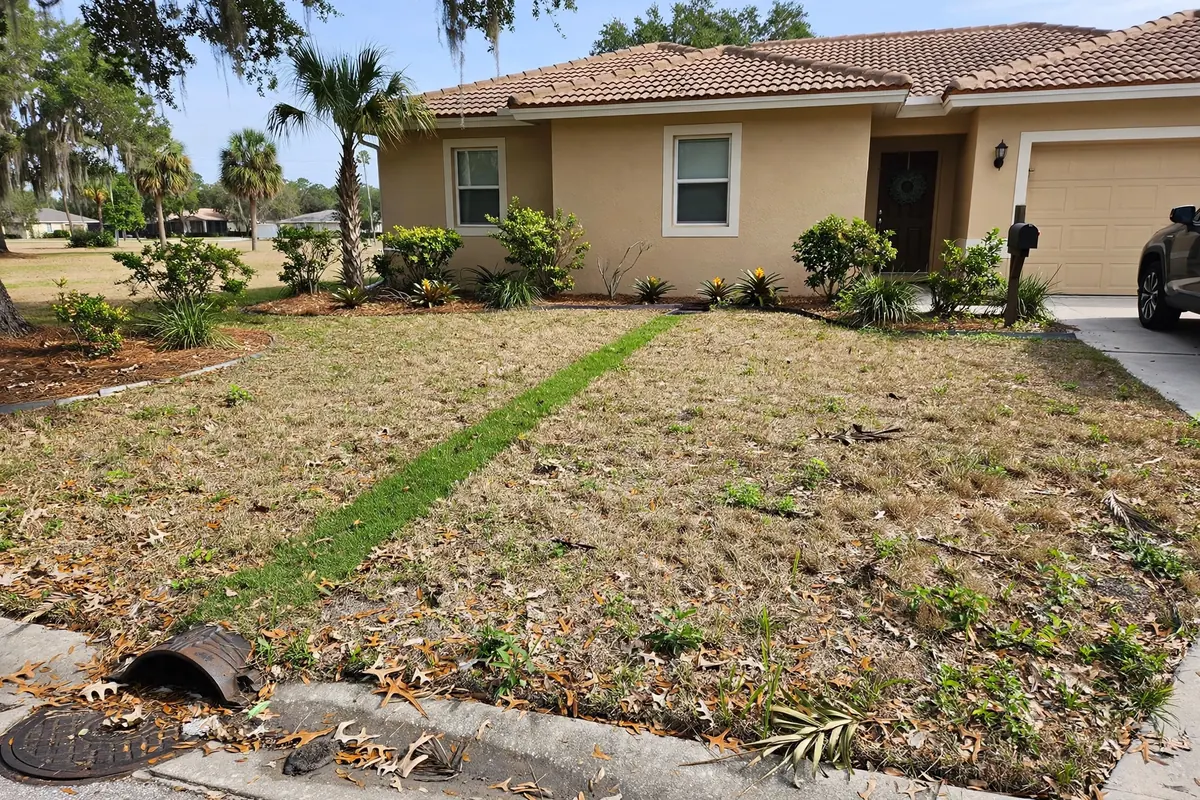
4. Unexplained Soggy Spots or Extra-Green Grass
A patch of lawn that's suspiciously lush — greener, faster-growing than everything around it — is drinking something. A leaking sewer lateral is, unfortunately, fertilizer. Same goes for soggy spots that never dry out, even days after rain.
Florida's sandy soil makes this trickier to spot than in clay country: water drains through sand fast, so a leak may not puddle. Look instead for the grass. And look for settling or small sinkholes along the pipe's path — sand washing into a broken pipe leaves voids behind, and voids eventually collapse.
5. Backups in the Lowest Drain First
When a main line blocks, sewage takes the path of least resistance — which is the lowest opening in the house. That's usually a shower, a tub, or a floor drain on the ground floor. If flushing the upstairs toilet makes the downstairs shower burp up water, your main line is telling you exactly where it stands.
This is past the "keep an eye on it" stage. Recurring backups mean the restriction is significant, and every backup is wastewater where it doesn't belong. If it's happening now, treat it as urgent — emergency backup service exists for exactly this.
6. Frequent Clogs That Keep Coming Back
A drain that clogs, gets cleared, and clogs again in the same spot isn't suffering from bad luck. Something structural is catching debris: roots that regrow after cutting, a belly that collects solids, scale ridges inside old cast iron, or an offset joint snagging paper.
Repeated snaking or plunging treats the symptom. If you're calling for drain clearing more than once or twice a year for the same line, stop paying for temporary relief and get a camera inspection. Seeing the actual problem is always cheaper than clearing it five more times.
7. Foundation Cracks, Settling, or Sinkholes Near the Line
This is the rare one, and the scary one. A badly broken lateral can wash soil out from under slabs, walkways, or even foundations. In Florida's sandy ground, a leaking pipe can carry surprising amounts of soil with it over time. Cracks appearing in a patio or settling near where the lateral runs deserve a look underground before you assume it's "just settling."
Not every crack is a sewer problem — Florida homes shift for plenty of innocent reasons. But if the settling follows the path from your house to the street, connect the dots and investigate.
What to Do When You Spot One (or Three)
Don't panic, but don't file it under "later" either. The practical order of operations: note which fixtures are affected and when it started, check whether it's one drain or the whole house, and call for a camera inspection if more than one sign is present or any single sign keeps recurring. An inspection is a small, fixed cost that turns guessing into knowing — and knowing early is what keeps a $500 cleaning from becoming a $15,000 replacement.
The through-line of all seven signs: sewer problems get more expensive with time, never less. The pipe doesn't heal. Catching it at the gurgling stage instead of the backup stage is the cheapest decision you'll make about your plumbing.
The Subtle Signs Most People Miss
Beyond the big seven, there are quieter clues worth knowing:
- A strip of unusually healthy grass following a straight line from your house toward the street — that's the lateral's path, fertilized by a leak. It looks like good lawn care. It's actually a pipe failure map drawn in grass.
- Small sinkholes or depressions appearing along that same path. Sand washing into a broken pipe leaves voids; voids become dips. In Florida's sandy soil, this can progress faster than you'd expect.
- Rats or insects appearing around drains or in the yard near the line path. Broken sewers are pest highways — if you're seeing rats where you never did, the pipe may be the reason.
- Mold or mildew on walls near slab level with no plumbing leak visible inside. A broken lateral under the slab can wick moisture upward invisibly.
- A sudden spike in your water bill with no change in usage. Less common for sewers than supply lines, but a cracked lateral near the house can interact with foundation drainage in ways that show up on the bill.
None of these proves a sewer problem alone. But two or three together, or any one of them plus a classic sign from the main list, is worth a camera look.
A 10-Minute Sewer Check You Can Do Today
You don't need equipment to do a basic assessment. Walk through this:
- Run the test: flush the upstairs toilet while watching the downstairs shower or tub drain. Any gurgling or water rising? Note it.
- Sniff test: walk the yard along the likely lateral path (house to street, roughly). Any sewage odor in one spot? Check near cleanouts too — and check whether your cleanout caps are present and intact.
- Lawn scan: look for the too-green strip, soggy patches, or depressions described above.
- History check: when did you last have the drains cleared? If it's been twice in a year for the same line, that's data.
- Age check: do you know your lateral's material and age? Pre-1970 homes in Manatee County are likely clay or cast iron — both past or approaching end of life.
If this walkthrough turns up two or more concerns, don't wait for the backup. A camera inspection is the logical next step — it's the cheapest way to convert worry into a plan.
Need help with your sewer line?
We serve Bradenton and all of Manatee County. A camera inspection is the fastest way to know what's going on.
Call (941) 214-9486