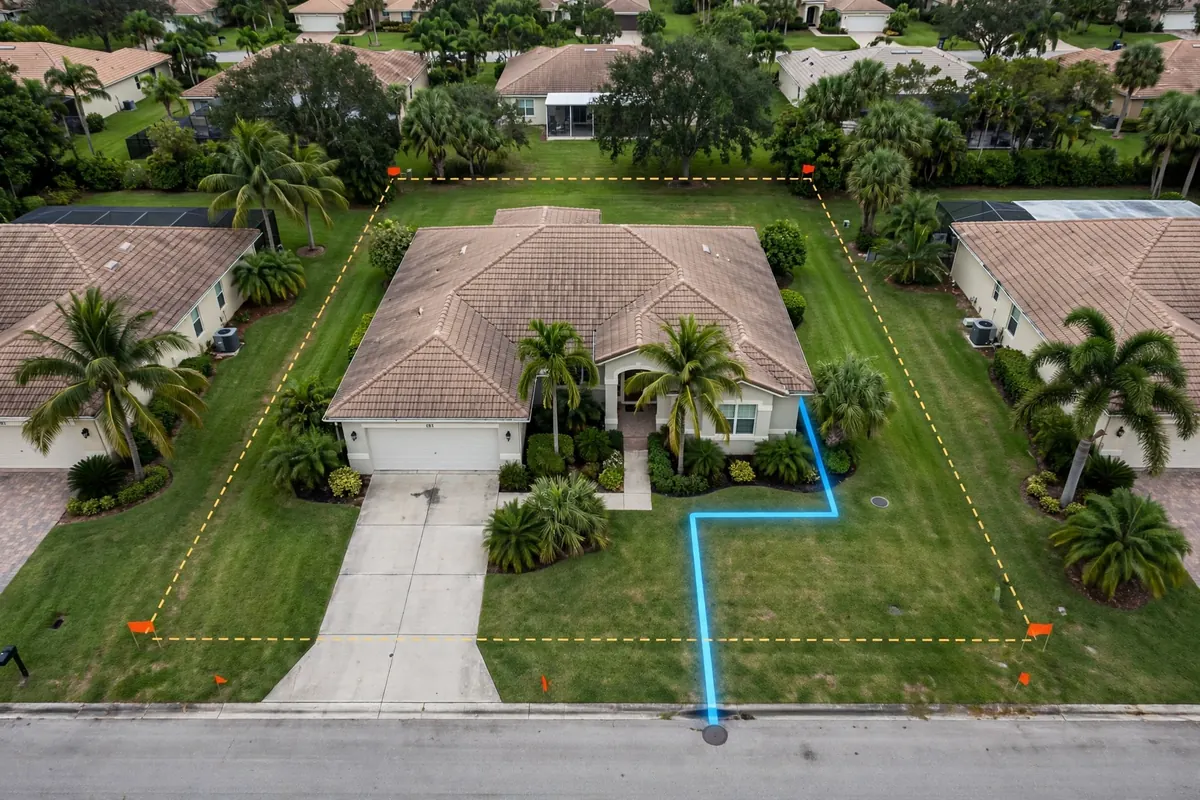
The Basic Split: Your Lateral vs. Their Main
Here's the rule that governs almost everything: you own the lateral — the pipe running from your house to the point where it connects to the public sewer main. The county (or city) owns the main — the larger pipe running under the street that collects flow from the whole neighborhood.
Your lateral includes everything from where it exits your foundation, across your yard, under the sidewalk, to the tap connection at the main. Yes — including the portion under the public right-of-way between your property line and the street. That surprises almost everyone. The county owns the main, not the ground above your lateral.
So when the plumber says the break is "out by the street," that usually still means your pipe, your bill — unless the problem is in the main itself.
Where Exactly Is the Dividing Line?
The connection point — called the tap or wye — is where your lateral joins the county main. In most Manatee County neighborhoods, the main runs under the street (or sometimes an easement behind the homes), and your lateral runs from your house to meet it.
In practice, the dividing line is determined by a camera inspection and, when needed, by the utility's own records. If the defect is in your lateral — roots, a cracked section, a belly — it's yours to fix. If the main is blocked or collapsed and backing up multiple homes, that's the utility's problem, and they dispatch their own crews.
One common confusion: if your lateral connects to the main and the connection itself is damaged, responsibility can get murky. Document the location precisely with your inspection footage — it's your best evidence in any dispute.
What Manatee County Actually Handles
Manatee County Utilities maintains the public collection system: gravity mains, force mains, lift stations, and treatment facilities. When a main line blocks — you'll know because multiple homes on the street back up simultaneously — the county responds. They also maintain the portion of the system up to and including the main.
What they don't do: repair private laterals, clear roots from your line, or fix the connection on your side of the tap. Some municipalities in other states offer lateral assistance programs; don't assume one exists here. If you're unsure whether a problem is yours or theirs, a camera inspection that locates the defect precisely settles the question fast.
The Septic Wrinkle: When There Is No County Main
Parts of Manatee County aren't on county sewer at all. If your home runs on a septic tank — common in Myakka City, parts of Parrish's rural pockets, and documented gaps like Snead Island in Palmetto — then the entire wastewater system on your property is yours. There's no county main to connect to and no shared responsibility.
The county does run a Septic to Sewer Conversion Grant program and an MSBU petition process (if 67%+ of benefiting property owners petition, the county can extend sewer lines to an area). If you're on septic and county sewer is expanding toward you, that's worth knowing about — a septic-to-sewer conversion changes the ownership picture entirely, because your new lateral then falls under the standard lateral/main split.
What to Do When Responsibility Is Disputed
Disputes usually sound like this: the county says the blockage is in your lateral; you suspect it's the main. Here's how to handle it:
- Get an independent camera inspection with location data — how many feet from the cleanout, which direction, what's visible. Vague claims lose; footage wins.
- Ask the utility to inspect their main. If neighbors are having simultaneous problems, that's strong evidence of a main issue. Talk to your neighbors before you call — a pattern is persuasive.
- Get everything in writing. If a county crew clears "your" blockage from the main, note the date and what they found. If your contractor finds the defect at a specific point, keep the report.
- Don't start with a lawyer; start with footage. Most disputes evaporate once both sides can see exactly where the problem is.
The Bottom Line for Your Wallet
Plan on owning everything from your house to the main — budget and maintain accordingly. The county's responsibility starts at infrastructure that serves the neighborhood, not your home. Knowing this before a crisis means you maintain your lateral proactively (inspections, maintenance, prompt root treatment) instead of discovering the ownership rules at 11 PM with sewage in the shower.
Easements: When the County Works on Your Property
Here's a wrinkle that confuses homeowners: the county main sometimes runs through a utility easement on your property — typically along the back or side lot line. The county has the right to access, dig, and repair their main within that easement. They'll restore the surface, but they won't upgrade your landscaping beyond basic restoration, and they can remove obstructions (sheds, fences, plantings) in the easement if needed.
Know where your easements are before you build that shed or plant that hedge. Your property survey or the county's records show them. Building over an easement doesn't transfer ownership of what's underneath — it just guarantees a bad day when the utility needs access.
Shared Laterals: Condos, Duplexes, and Gray Zones
In some older multi-unit setups — duplexes, small condo conversions, mother-in-law additions — two units share a single lateral to the main. Who owns it? Typically, responsibility is shared, which in practice means it's nobody's until it fails, at which point it's everybody's argument.
If you own or are buying a property with a shared lateral, get the arrangement in writing: who pays for maintenance, who decides on repairs, how costs split. For condo communities, the association's documents should define where unit responsibility ends and common-element responsibility begins — read them before you need them. A camera inspection can at least establish the physical facts: where the shared section runs and what condition it's in.
Newer Developments: Who Owns What in Master-Planned Communities
In places like Lakewood Ranch, the picture has extra layers: the developer installs the initial infrastructure, a Community Development District (CDD) may own and maintain common systems, and the county or a utility authority operates the treatment side. Your lateral is still yours — that part doesn't change — but the main might be owned by an entity other than the county.
The practical advice is the same: know who operates your system. Your HOA or CDD documents name the utility provider. When a problem arises, calling the right entity first saves days of being bounced between offices. And the camera-inspection-first rule applies everywhere — footage settles jurisdiction questions faster than phone calls.
The Dispute Playbook: A Worked Example
Put it together: it's Tuesday, your downstairs shower is backing up, and your neighbor mentions theirs did the same thing last week. Don't call a private plumber first — call the county utility and report a possible main issue, mentioning the neighbor. If the county clears the main and the problem persists at your house alone, then call for a private camera inspection. You've just eliminated the free fix before spending a dollar.
Reverse scenario: only your house is affected, camera shows a root-choked lateral at 30 feet on your side of the tap. That's yours — no dispute, no county call needed. Get it fixed, and consider whether the pipe's condition warrants repair or replacement while you're at it. Clean information makes clean decisions.
Need help with your sewer line?
We serve Bradenton and all of Manatee County. A camera inspection is the fastest way to know what's going on.
Call (941) 214-9486