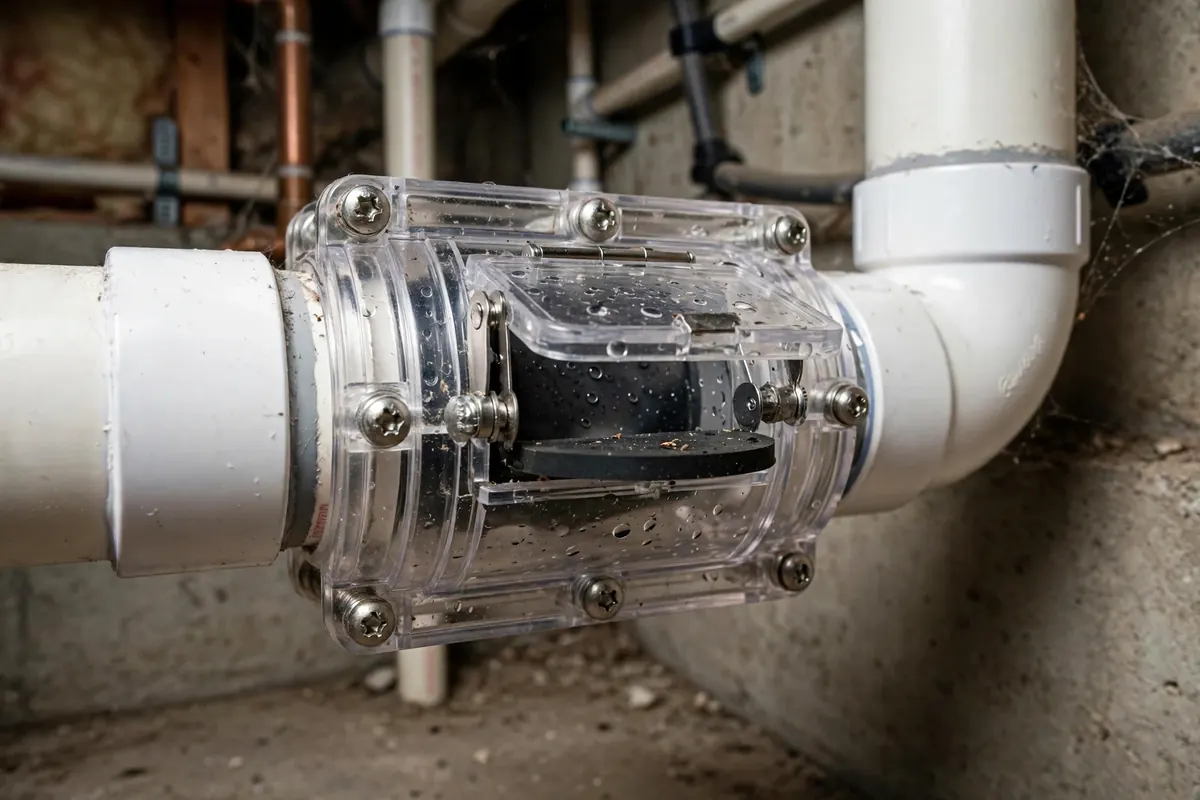
A One-Way Door for Sewage
The device itself is simple: a valve body installed in your sewer lateral with a hinged flapper inside. Under normal conditions, your wastewater flows out and the flapper hangs open. When flow reverses — the county main surging back toward your house — the flapper swings shut and seals. Sewage stays in the street's problem, not yours.
When pressure normalizes, the flapper reopens on its own. No electricity, no moving parts to plug in, no maintenance beyond a periodic check that it's clean and moving freely.
Why Bradenton Homes Need This
Our backups aren't random — they're weather-driven. When a tropical downpour hits, stormwater infiltrates aging clay pipes all over the county through cracked joints, the treatment system surges, and low-lying laterals become the path of least resistance. The water has to go somewhere, and "somewhere" is often back up through floor drains and showers.
The risk concentrates by elevation. Anna Maria Island's three cities sit at 0 to 3 feet — Bradenton Beach is literally at sea level. Riverfront and bayfront neighborhoods, canal-front streets in Bayshore Gardens, anywhere the water table already sits high: these are the homes that back up first when the sky opens. If your street ponds in heavy rain, your lateral is in the surge zone.
And it's not just hurricanes. The king tides and tidal flooding the island cities already fight — Holmes Beach is actively installing tide valves for its stormwater system — show how water finds its way in. Your sanitary line deserves the same protection.
How the Valve Gets Installed
- Locate and assess. We find your lateral and confirm the right placement — the valve goes on your side of the property, where it protects everything downstream of it in your home.
- Excavate one spot. A single targeted dig to expose the line. No trench.
- Install the valve. We cut in the valve body with proper fittings, set it level (a tilted valve won't seal), and install an access box at grade so the valve can be inspected and cleaned.
- Test. We verify the flapper moves freely and seals properly before backfilling.
Most installations are done in a day. The access box stays visible at grade — you'll know exactly where it is, and so will we on future visits.
What a Backwater Valve Doesn't Do
Straight talk: the valve protects against flow coming back from the county main. It does nothing for blockages in your own line — roots, grease, breaks on your side will still back up regardless of the valve. That's why we recommend a camera inspection first: if your lateral has its own problems, fix those too, or you'll have a valve guarding a line that fails from the inside.
The valve also needs its flapper checked periodically — debris can keep it from sealing fully. It's a 30-second check during any service visit, and part of our maintenance program.