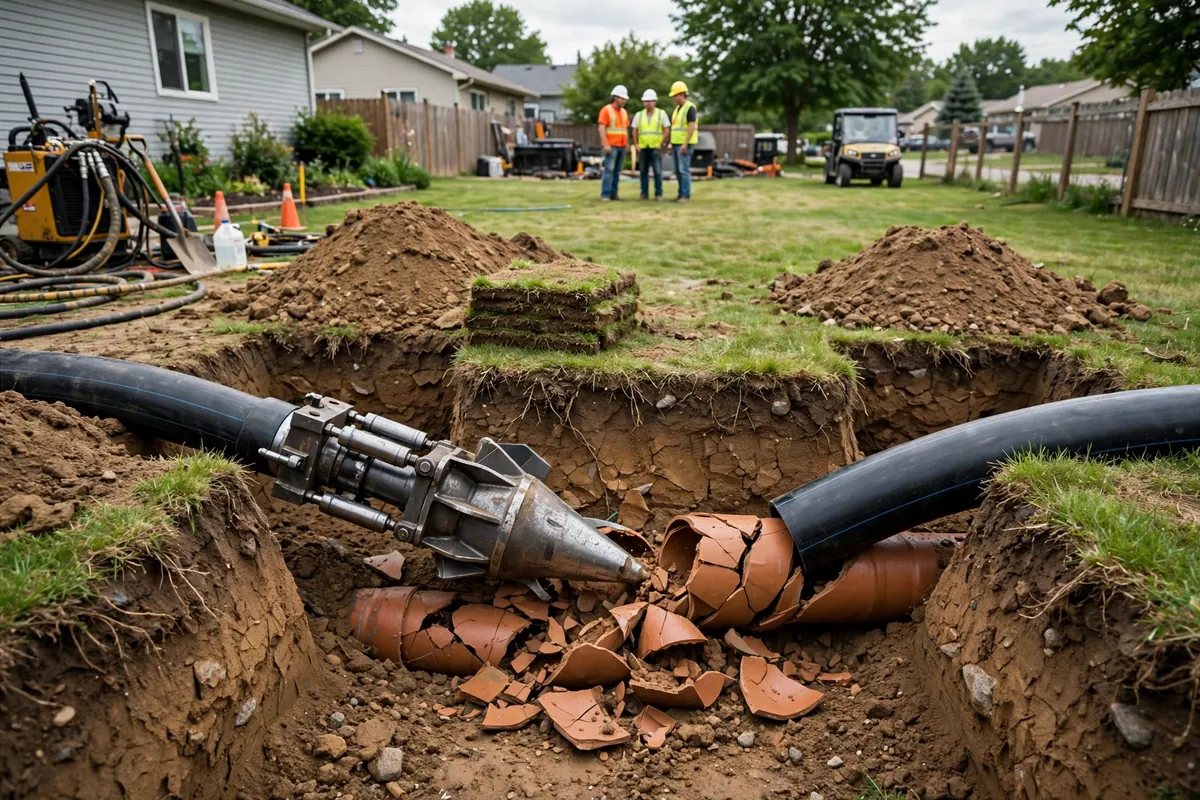
Out With the Old, In With the New — Underground
Here's the process, step by step:
- Two small pits. We dig an entry pit at one end of the run and a receiving pit at the other. That's the only digging — no trench between them.
- The bursting head goes in. A cone-shaped bursting head is fed into the old pipe, attached to a steel cable or rod string.
- Break and pull. Hydraulic power pulls the head through the old line. It fractures the old pipe outward into the surrounding soil while towing the new HDPE pipe directly behind it.
- Connect and verify. We connect the new line at both ends, backfill the two pits, and run a camera through to confirm a clean, continuous run.
The new pipe is HDPE — high-density polyethylene — fused into one continuous piece with no joints. It's flexible, tough, and shrugs off the soil shifting that cracked your old clay or cast iron in the first place.
When Bursting Beats Lining
Pipe lining is great when the old pipe still holds its shape. Bursting is for when it doesn't. Choose bursting when the camera shows a collapsed section, severe breaks, pipe that's lost its round shape, or heavy deterioration that lining can't bridge.
Bursting has one more trick lining can't match: upsizing. Because the bursting head pushes soil outward as it goes, we can pull in a larger-diameter pipe than the old one. If your old 4-inch line is undersized for the house — common in older Bradenton homes that have added bathrooms over the years — bursting lets us step up capacity without a trench.
Our trenchless guide lays out the full comparison if you're weighing the two.
Why HDPE Holds Up in Florida Soil
Bradenton's sandy soil is always on the move — it shifts with heavy rain, dries and settles, and generally refuses to sit still. Rigid old pipes (clay, cast iron, even old PVC with glued joints) crack or separate at the joints when the ground moves. HDPE is different: it's flexible and fused into a single jointless run, so it moves with the soil instead of fighting it.
That matters in neighborhoods with 60-year-old clay laterals sitting in sand, and it matters even more near the water — riverfront lots, canal-front homes in Bayshore Gardens, and low-lying streets where the water table pushes and pulls on everything buried. A jointless HDPE line simply has fewer ways to fail.
What Bursting Day Looks Like
Most residential bursting jobs are done in one day. You'll see equipment at the two pit locations and hear the hydraulic puller working, but there's no trench, no backhoe driving across your lawn, and no week-long project. We backfill and compact the pits the same day. You will need to avoid using your drains while we make the final connections — we'll give you the timing that morning.