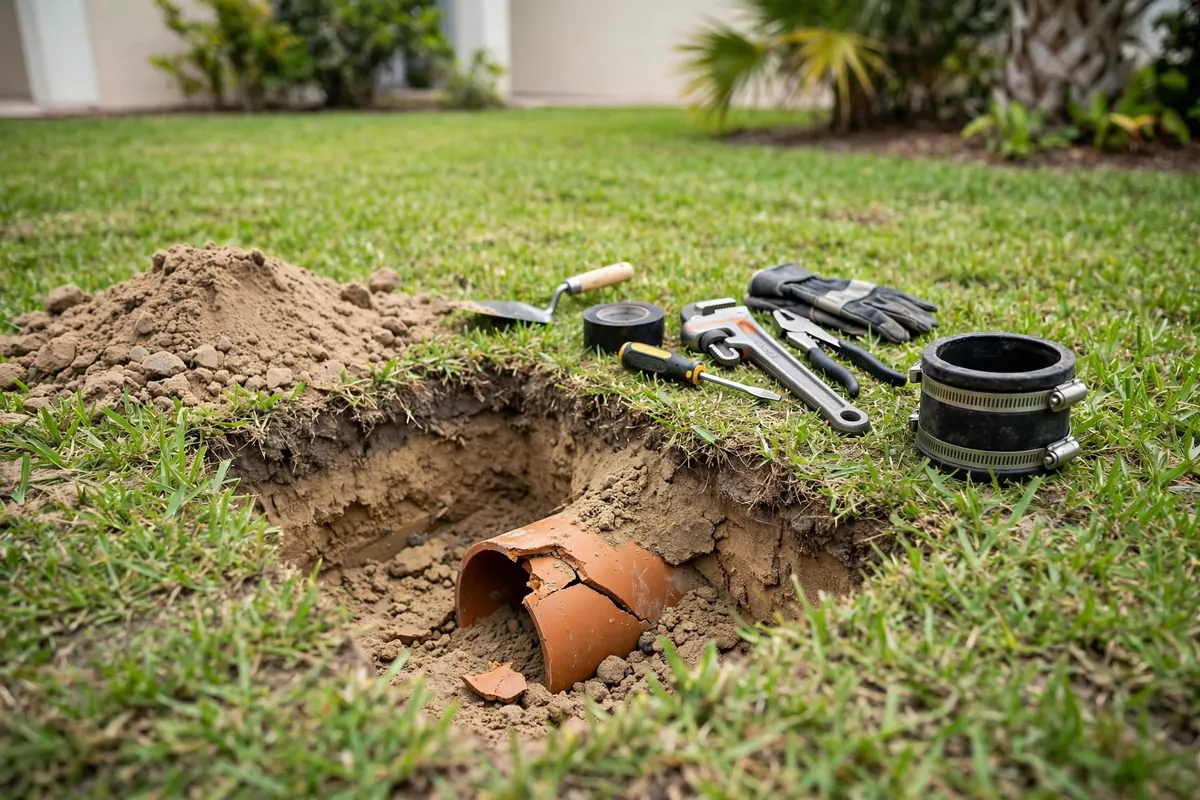
One Bad Section, One Fix
Sewer lines fail unevenly. A single joint separates where a live oak root pushed through. One section cracks where sandy soil shifted. The other forty feet of pipe? Perfectly fine. Replacing the entire line for one bad spot is like replacing your whole roof for one missing shingle.
A spot repair targets exactly the damaged section — usually a few feet of pipe — and leaves the healthy pipe alone. It only makes sense when the camera inspection confirms the rest of the line is sound. If the whole line is deteriorating, we'll tell you, and talk about full trenchless repair instead.
How a Spot Repair Works
- Find it precisely. The camera locates the damage, and the locator beacon tells us exactly where it is underground and how deep — often within inches.
- Expose just that section. We dig a small, targeted excavation over the bad spot. Not a trench — a hole.
- Cut out and replace. The damaged section comes out, new pipe goes in with proper couplings, bedded and sloped correctly.
- Backfill and restore. We compact the backfill in layers (critical in sandy soil) and restore the surface.
Some spot repairs can even be done trenchlessly — a short sectional liner that patches the bad area from inside. When the damage suits it, that's the least disruptive option of all.
When a Spot Repair Is the Right Call
Spot repairs shine in specific situations: a single separated joint, one section crushed by a vehicle or heavy equipment, a short stretch invaded by roots while the rest of the line is clean, or damage from a fence post or landscaping project that hit the line. These are localized injuries, not systemic failure.
The key question is always the condition of the rest of the pipe. A 15-year-old PVC line with one cracked section? Spot repair all day. A 65-year-old clay line where the camera shows cracking at every joint? Fixing one spot just means you'll be fixing the next one soon — that's when full replacement is the honest recommendation.
The Honest Math
A spot repair typically costs a fraction of a full line replacement — you're paying for hours of work, not days, and a few feet of pipe, not the whole run. But it only saves money if the rest of the line holds up. That's why we never quote a spot repair without a full camera run first. If the footage shows the rest of the pipe is healthy, the spot repair is the smart money. If it doesn't, we'll show you why and price the real fix.