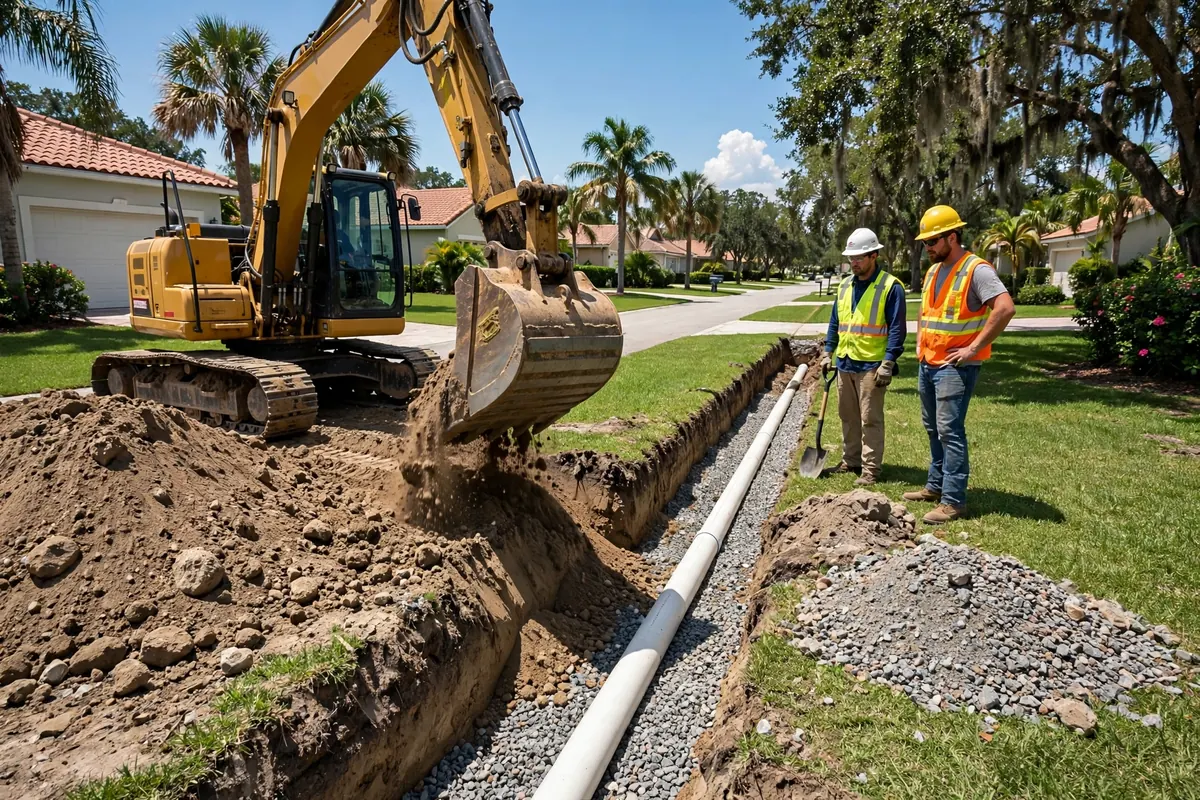
When Digging Is the Right Answer
We're a trenchless company, so it should mean something when we tell you a job needs digging. Here's when traditional replacement wins:
- Collapsed pipe. If the line has caved in, there's nothing for a liner to follow and bursting can't get a clean pull.
- Deep bellies. A sagging section that holds standing water needs its grade corrected — that means exposing the pipe and re-bedding it at the right slope.
- Severe misalignment. Joints that have separated badly or sections pushed far off line by shifting soil.
- Very shallow lines. Some older laterals run surprisingly shallow. When there's barely any cover, digging is fast and trenchless equipment can't get the depth it needs to work.
A camera inspection shows us which situation you're in before anyone picks up a shovel. If trenchless can do the job, we'll say so — it's usually less disruptive and often cheaper overall.
How a Traditional Replacement Goes
Open-trench work is straightforward, and we keep it as tidy as a dig can be:
- Locate and mark. We mark the line's path, depth, and every utility crossing. Then we plan the trench to disturb as little as possible.
- Excavate. We open the trench, set excavated soil aside on tarps (not your lawn), and shore the trench walls for safety.
- Remove and replace. The old pipe comes out. New pipe goes in on a properly compacted bed, at the correct slope, with the right fittings at every connection.
- Backfill in lifts. This is where cheap jobs fail. We backfill in compacted layers so the ground doesn't settle into a sunken trench line six months later — a real risk in our sandy soil.
- Restore. Sod, grade, and cleanup. We don't leave you with a dirt scar.
The Backfill Matters More Than the Dig
Here's something most homeowners never hear: in Bradenton's sandy soil, the most important part of a traditional replacement isn't the new pipe — it's the backfill. Sand doesn't compact itself. If a contractor dumps loose sand back in the trench and walks away, you'll get a settling trench, a dip in your driveway, and possibly a new belly in your new pipe within a year.
We compact in lifts and bring the grade back to where it was. Ask any contractor you're comparing how they backfill. If they don't have a clear answer, that's your answer.
What It Costs You in Disruption
Let's be straight: traditional replacement is disruptive. There's heavy equipment, a trench across part of your property, and a multi-day timeline — usually two to four days for a residential lateral, plus restoration. Driveways get cut if the line runs under them. Landscaping in the trench path comes out.
That's exactly why we check trenchless options first. But when the pipe truly needs it, a proper open-trench replacement done right — correct slope, compacted backfill, clean restoration — gives you a brand-new line with zero compromises. Sometimes that's worth the mess.